
SMC: Socialist Majority Convention
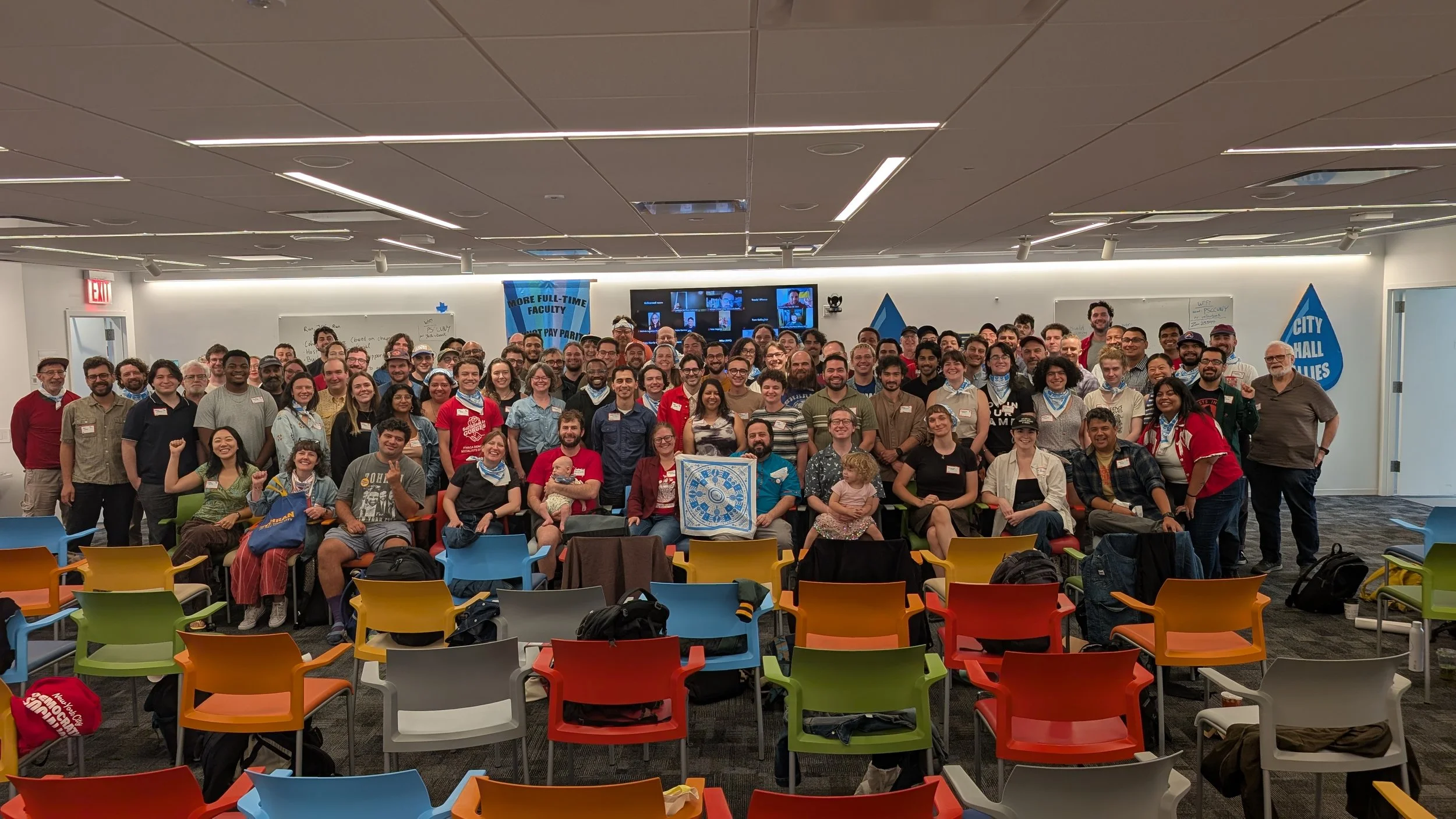
Members of Socialist Majority on the first day of the caucus convention.
Photo credit: Megan E.
SMC Editorial Board Note: This piece is not an official caucus statement, but the opinion of the author.
On the third weekend of September, 2026, Socialist Majority Caucus held its first ever convention. The hybrid gathering drew 122 in-person attendees and dozens more joining on-line from 27 Democratic Socialists of America chapters. SMC seems poised to only grow stronger and more united going into the 2027 DSA convention, especially around electing Alexandria Ocasio-Cortez president.
The conference programming was set by SMC’s steering committee, led by caucus co-chairs Kristian Hernandez and Colleen Johnston. Plenaries and workshops were a mix of history, internal plans around organizing and communications strategies, and mass-focused panels around coalition building.
Caucus co-founder Sam Lewis opened the gathering offering a bit of SMC history. (I was one of the handful to stand when asked if we had joined SMC at its beginning.) Starting in 2019 before that year’s DSA convention, Sam recounted how the internal grouping first began as somewhat an anti-caucus against the two major tendencies of the time. He even noted one of the original names being considered was “Unity Caucus.”
Sam covered how SMC gradually shifted from this orientation to become more coherent internally and selective in who it admitted. While the caucus faced setbacks in national leadership (NPC) representation - falling to just two in 2023 - the membership has steadily grown to hundreds. Now SMC has four seats on the NPC.
The day included a messaging workshop with Amelia Dornbush and Ritti Singh. Both have extensive experience on campaigns, labor, and political communications. They covered different strategies about how the caucus could improve how it talks to fellow DSA comrades. Their plenary incorporated exercises about tools to reach different kinds of DSA members and unorganized people outside of DSA.
Diana Moreno, the New York assemblymember who replaced Zohran Mamdani, served as the keynote speaker. Diana recalled being recruited to run by her own comrades and how she is fighting for a world where her child, and all children, including Palestinian ones, can live without want and fear.
The convention also featured breakout sessions, including a panel on coalitions that I attended. The workshop’s conversation included veteran DSA members and trade unionists Jose LaLuz and Michael Lighty, Mo Alharbi of NYC Mayor’s Office of Mass Engagement (OME), and Cea Weaver, Director of NYC Office to Protect Tenants. Each told a different story of organizing and mobilizing communities beyond DSA.
Cea’s attendance underscored the presence of different kinds of movement builders in the caucus - especially beyond the ballot. SMC has a well-deserved reputation of being a place for some of the leading electoral campaigners in and outside of DSA (convention attendees include several elected officials from the northeast). Some of SMC’s most prominent members include incoming congresswoman Claire Valdez and head of OME Tascha Van Auken.
Cea was joined by leading housing advocate June Nemon of Hudson Valley Tenant Union, which was featured in this month’s In These Times. Not to mention the many union militants and staff who also are growing the labor presence of the caucus on the chapter and national levels.
On the final day, SMC also debated several resolutions from caucus members on topics such as international politics and our orientation towards party building. Ultimately, some were referred to the caucus steering committee and another, while achieving a majority, failed to meet the threshold for a whole caucus vote. But these conversations demonstrate a dynamism in SMC to resolve questions that the caucus has not fully grappled with in the recent past.
Some of the old guard in attendance, including myself, marveled at the size and tenor of the caucus convening. A convention, in my first years in the organization, that would have outdone the national DSA's gatherings in both size and relevance. It was impossible not to leave optimistic for both the caucus and DSA. While there are many challenges ahead, including electing Alexandria Ocasio-Cortez president of the United States, there is a feeling of collectivity in facing those barriers together. Even if we aren’t the “unity” caucus!